
Advertising in ChatGPT: The Next Frontier of Intent-Based Marketing
Advertising, as we know it, has functioned by interrupting consumers’ attention or by targeting keyword-based search intent. Conversational AI changes that narrative. When a user asks a question in ChatGPT or gives it a prompt, they are describing a nuanced situation rather than using incomplete sentences or random keywords. When AI populates a result, it has already synthesized information, and the advertising opportunities fall within that synthesis.
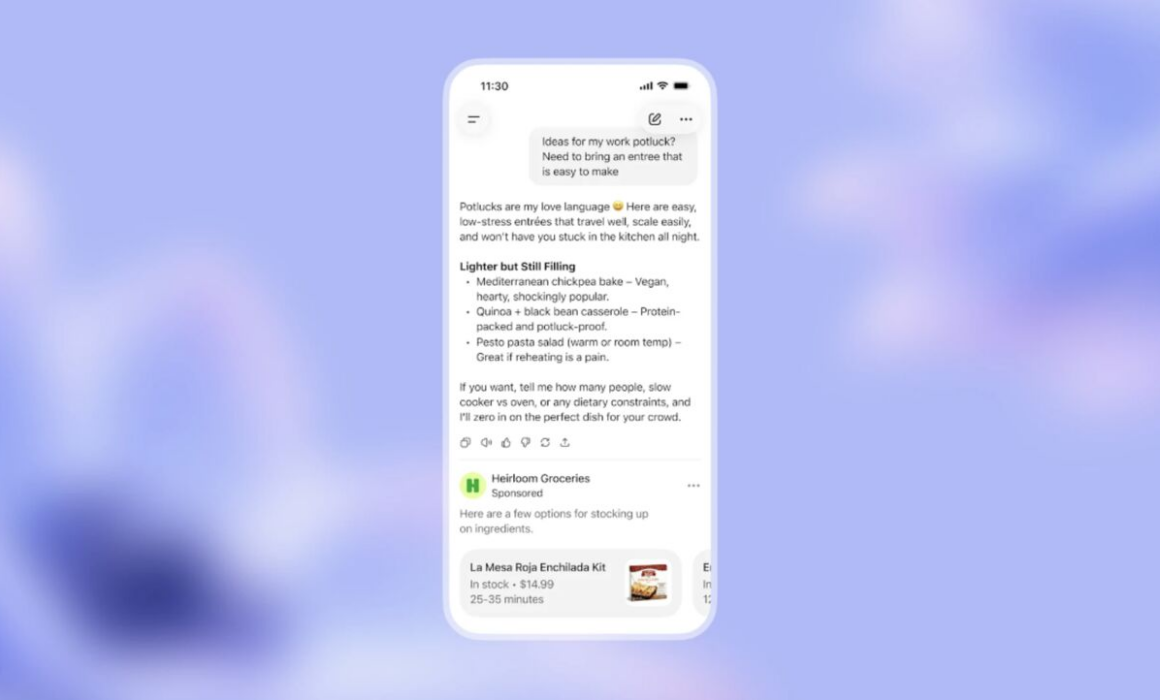
This opens the door for sponsored posts to align directly with what the user is searching for. For the companies and brands advertising in ChatGPT, this can lead to higher conversion rates because the results are closely matched to user intent. While conversational AI may not deliver the same volume of impressions as social platforms, it offers something more valuable in many cases: focused intent. Many AI interactions occur in moments of research, evaluation, or decision-making. Users turn to AI for product comparisons, workflow solutions, vendor recommendations, or strategic advice. These are high-intent interactions that often sit lower in the funnel, where influence has a greater impact. Advertising in ChatGPT is therefore less about broad reach and more about delivering relevance at the moment of intent.
Strategically, brands should begin prepping for this shift. As conversational AI becomes embedded in everyday workflows, discovery will increasingly happen through dialogue rather than scrolling or searching. The future of advertising in ChatGPT lies where attention meets intent.
There is another layer to this worth thinking about. As people’s use of AI grows, some will naturally gravitate towards a specific LLM. That repeated use begins to build innate trust and influence. So the AI starts to function less like a search engine and more like a trusted advisor or an influencer.
When sponsored recommendations are delivered within a trusted AI interaction, they can take on qualities similar to influencer marketing. Rather than feeling like a traditional ad, the suggestion is embedded within a response the user already trusts. This creates a more subtle, but arguably more powerful, form of influence. As a result, brands will need to think not only about relevance and timing, but also about how their presence aligns with the trust users place in these systems. As AI trust grows, so does the potential impact of advertising within the platform.